Our quality approach is built around process control and verification: from incoming material to final batch release, on either the dip spin or the automatic solvent line.
Five stages on either line, dip spin for water based and the automatic line for solvent. Scroll through them: the photo follows the stage you are reading.
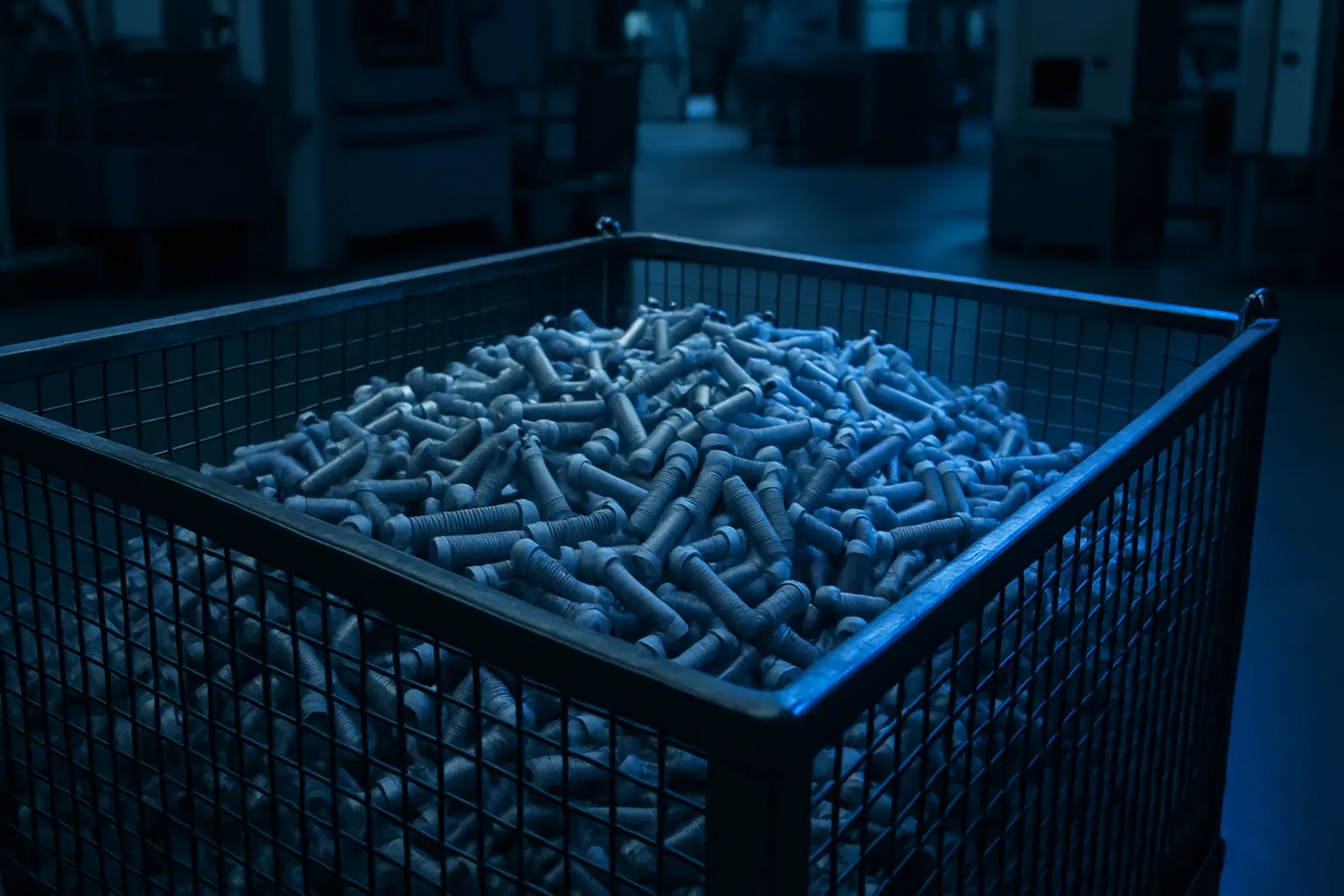
Every trace of oil comes off. Zinc flake is a thin film and it will not forgive a contaminated surface.
The surface is keyed so the flake layer has something mechanical to hold on to.
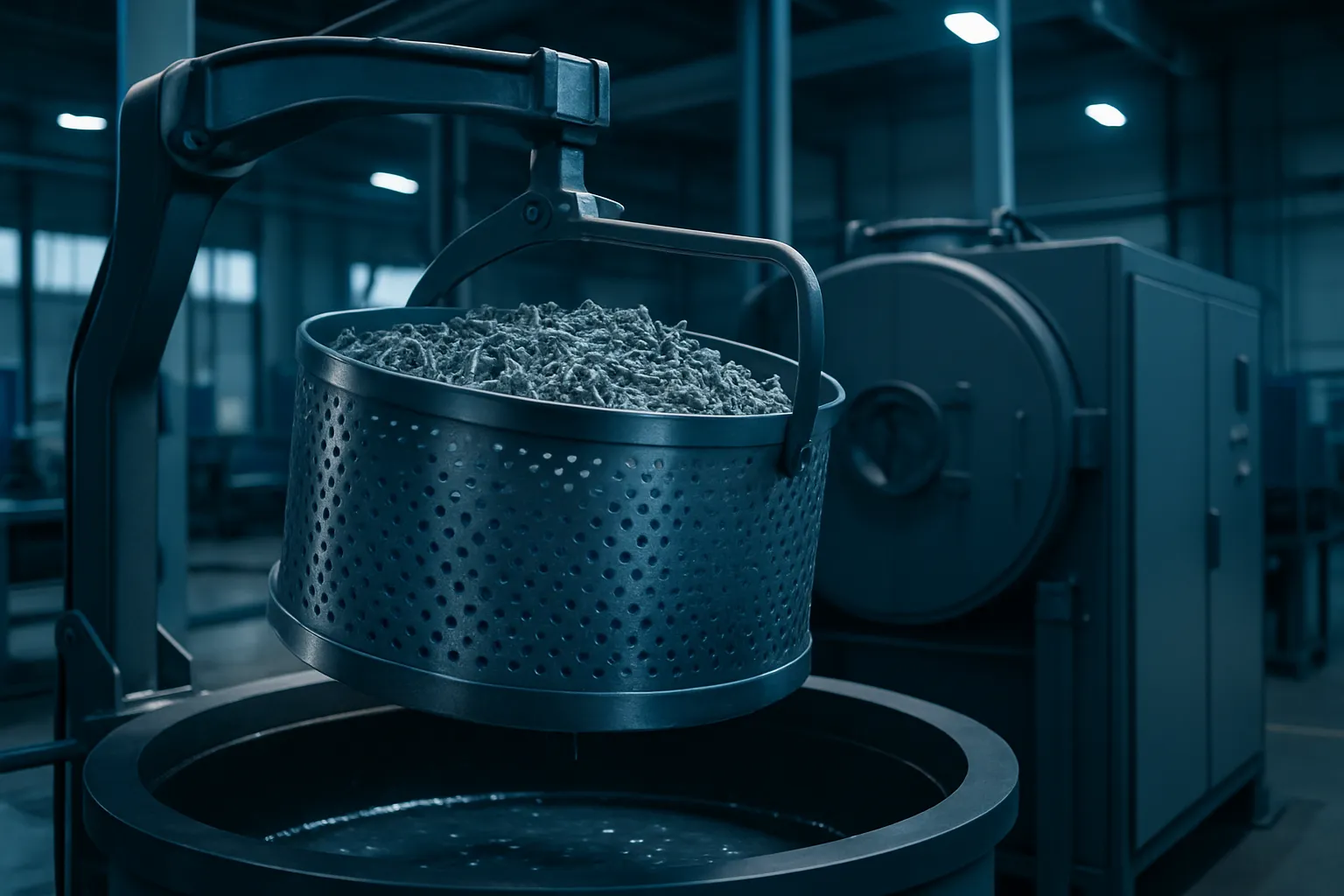
Parts are dipped, then spun so the excess flies off and the film thickness lands where it should.
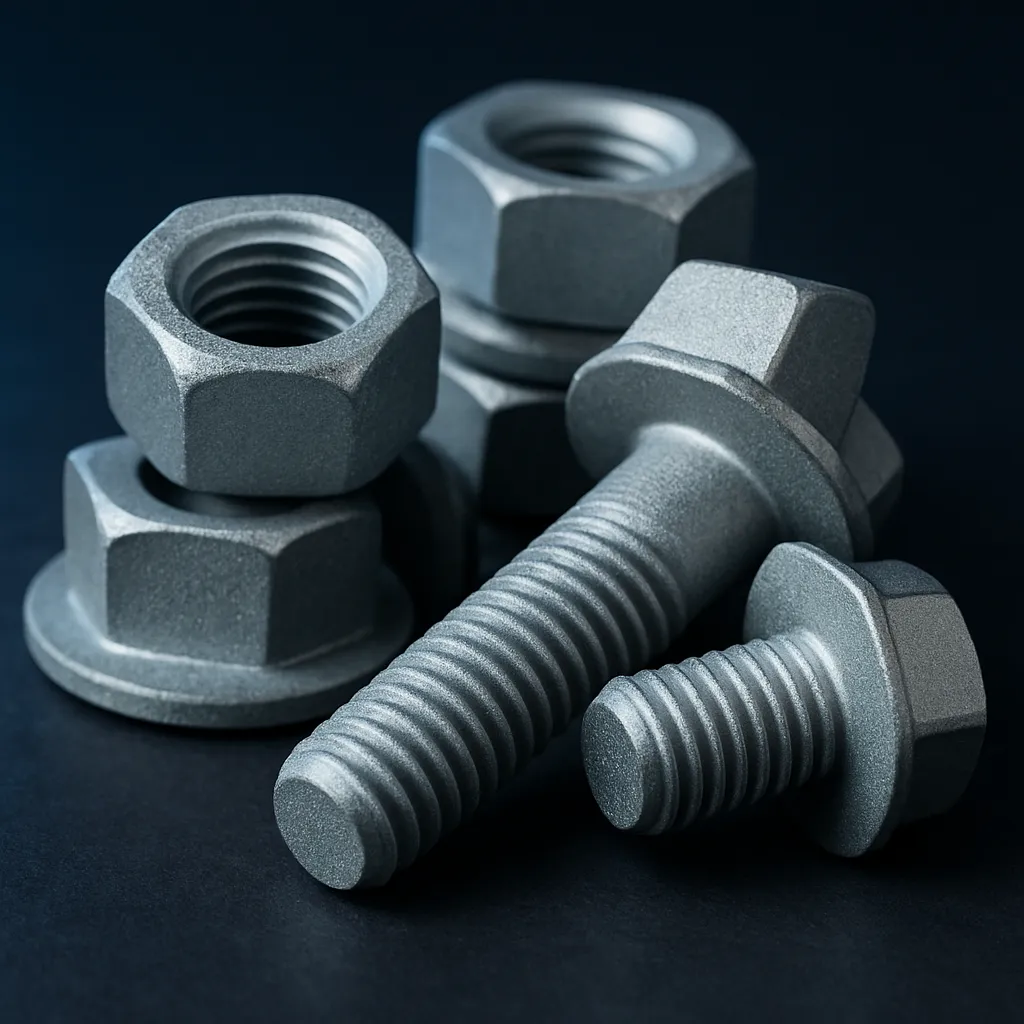
Oven cured so the zinc and aluminium platelets bond into overlapping layers, up to 320 C depending on the system.
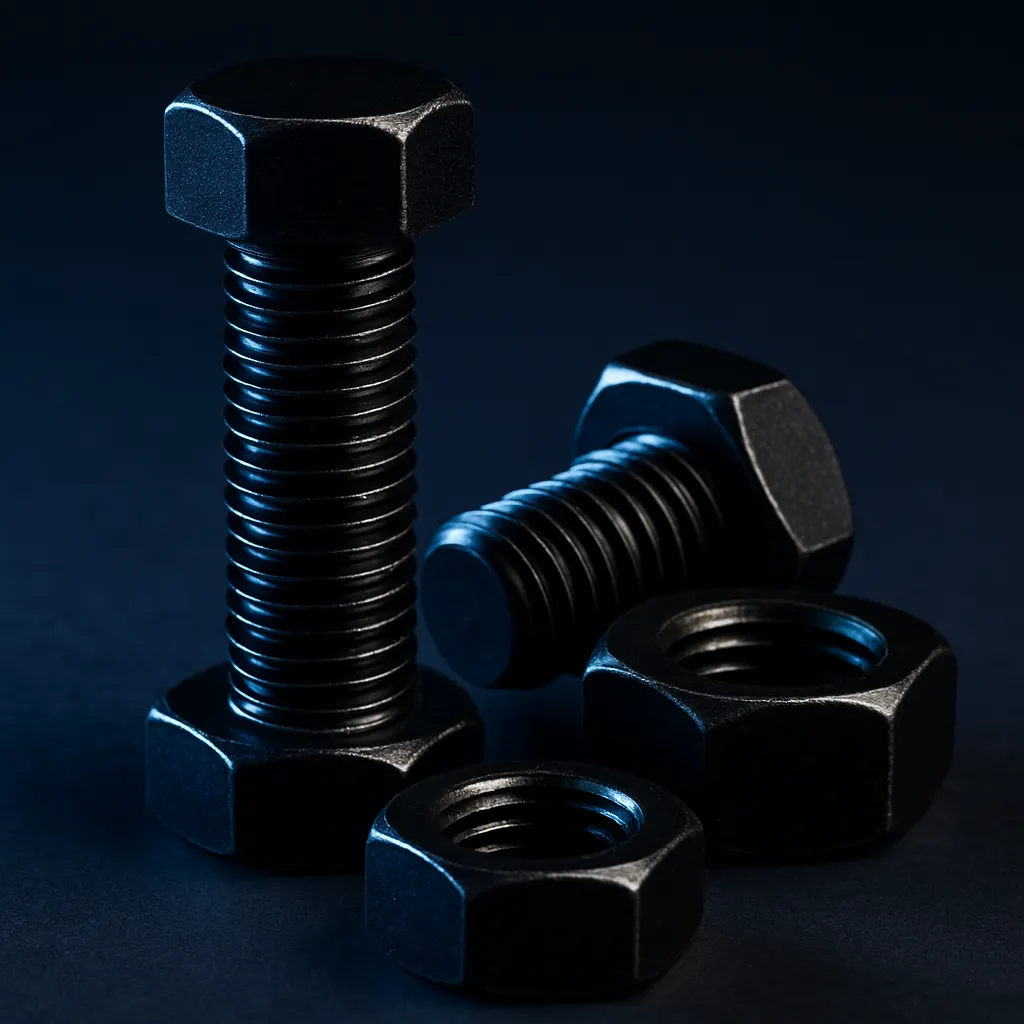
Cooled, then thickness and appearance checked before the batch is released.
A batch moves to the next gate only when the one before it is signed off, and the record follows the batch from the gate pass to dispatch.
Zinc flake coatings are applied through non-electrolytic processes rather than conventional electroplating, which eliminates the hydrogen embrittlement problem associated with the coating process. Final suitability is always evaluated against the customer's specification, substrate, heat treatment and complete coating process.
Non-electrolytic application generates no hydrogen in the coating step, so the embrittlement risk of the plating route is designed out rather than baked in.
Class 10.9 and 12.9 bolts, high-strength and safety-critical parts, where a delayed brittle failure is not an acceptable failure mode.
Enough throughput to hold a production schedule, and the test bench to prove every batch that leaves.
Send a trial lot through the line and put the report next to your specification.
